
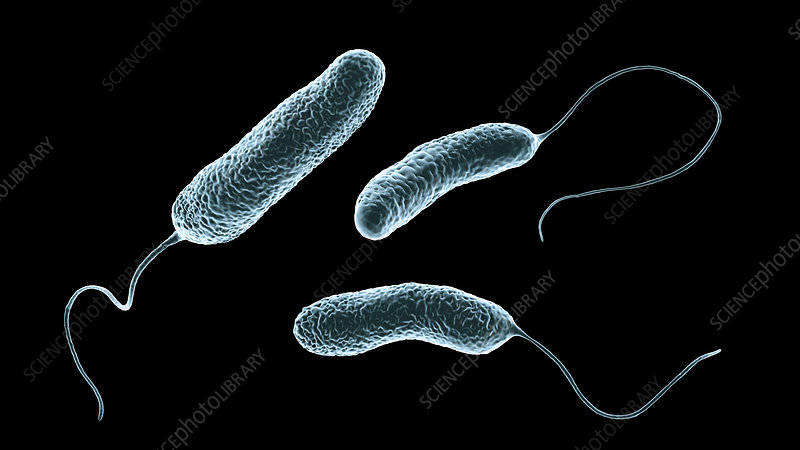
Magliano in Toscana, August 24th / 25th 2024, Edoardo Giuseppe Laterza
Crédit pour l’image de couverture: KATERYNA KON / SCIENCE PHOTO LIBRARY
What is the most commonly human-used material? Plastic of course. Plastic is everywhere,
in clothes, in devices, in cars… The most common reaction to this sentence is, “Yes, I know, but plastic can be recycled”, it’s fundamental to underline that only 9% of the plastic ever made has been recycled (“Global Plastic Outlook”, OCSE). In other words, a solution must be found to recycle plastic.
The issue with plastic is that it doesn’t biodegrade as wood or other natural materials, and
sometimes plastic molecules (or larger dimension plastic) enter the food chain in oceans. They are the so called microplastics.
Let’s go back to the early 21th century, more precisely to 2001 in Japan. A group of scientists, led by Kohei Oda, professor at the Kyoto Institute of Technology (KIT), found a little bacterium that was breaking down plastic to make energy to survive. Oda used to study bacteria given that his research philosophy says that when humans try to find a solution, the bacteria probably already have one.
This amazing finding was put apart. The reason that the plastic global issue wasn’t that critical at that time is that (the term microplastic wasn’t used yet). In 2016, scientists “re-opened” the research program based on plastic-vore bacteria. The discovered bacterium was Ideonella sakaiensis (fun fact: the name comes from the recycling plant based in Sakai, Japan). Ideonella sakaiensis is capable to “eat” one of the most common types of plastic used for the production of water bottles and of packages: polyethylene terephthalate, the so-called PET.
Earlier I used the term “eat” plastic. You will probably understand it’s not scientifically
accurate. Ideonella sakaiensis breaks down PET.
PET is formed by chains of C10H8O4 molecules (ten atoms of carbon, 8 atoms of hydrogen and 4 atoms of oxygen). The polyethylene terephthalate is a so-called monomer. A monomer is a simple based molecule which has the capability of combining itself with other molecules with the objective of creating a macromolecule (A molecule of a high relative molecular mass). A monomer chain forms a polymer. All plastics are polymers (but not all polymers are plastics).

Monomer of polyethylene terephthalate (PET)
Polymers are useful as the links of the monomer are so strong that at human scale that it’s
nearly impossible to tear apart a plastic-made container. Polymer’s strength is due to the high relative molecular mass. The more a polymer is “heavy” the more its strength will be important.
When you see that plastic remains intact for quite a long period of time, it’s not due to the fact that “plastic is a bad material” but that it’s obviously the polymer’s strength. So, when we talk about biodegradability as the physician P. Goswami said, we talk about “the ability of a material to decompose after interactions with biological elements” right after he affirms that “many plastics are highly stable and are slower to biodegrade”.
Now let’s go back to Ideonella sakaiensis, because we have to understand how it breaks
down the monomer’s links and so split and divide polymers.
Bacteria, like humans and living beings use enzymes to help and accelerate the cell’s work. For example, humans have plenty of different enzymes to help their body during the digestion (enzymes are specific to molecules, so an enzyme that divide complex carbohydrates (amylase), cannot break-down fats (lipase)). Ideonella sakaiensis has an enzyme (PETase) capable of breaking down PET polymers to take the carbon molecules and receive energy.
Ideonella sakaiensis on the left and degraded remains of plastic broken down by PETase and his host (Ideonella sakaiensis)
There are some issues with PETvore to; the main disadvantage with the use of PETase is that these enzymes (there isn’t just one enzyme as other bacteria, with obviously other enzymes, were found) work very slowly. Scientists are working to accelerate these digestion times drastically to try global applications. In fact, Prof John McGeehan, at the University of Portsmouth and his team have created a super-enzyme that works 6 times faster than the others. Secondly, like living beings, Ideonella sakaiensis produces waste after digestion: what before digestion was a polymer, becomes plastic a monomer. Luckily this waste can be recycled and transformed into new plastic. The temperature issue is also being solved.
In conclusion, scientists have found a complete natural way to break-down plastic polymers and in certain cases recycle them. As they are a brand-new research and development fields, scale, temperature, speed, economical and logistical issues have to be worked out by scientists and economists. The global community looks forward to see if with these microscale living beings, planet-scale climate crisis can be stopped or slowed.
Spotlight: Microplastics in our body?
The discussion normally put under observation sea animals, who, by
living in polluted water (by plastic), have very small pieces of plastic in their
bodies. What would be your reaction if scientifics affirm that they have found
microplastics, pieces of plastic “that are less than five millimetres in length
(or about the size of a pencil eraser)” (definition taken from a NOAA’s
article) into human organs?
The World Wildlife Fund and the University of Newcastle (AUS), in 2019,
with the analysis No Plastic in Nature combined usefully 50 studies in order
to approximate the “global average ingestion rate of plastic by humans [at] 5
grams per week” – a credit card weight is about 5 gm.
In 2022, in the Netherlands, researchers found microplastics in human
blood, and subsequently into men reproductive organs.
The most actual studies results are from august 2024. According to
Sedat Gündoğdu, researcher in microplastics at Cukurova University in
Turkey, “«it is now imperative to declare a global emergency» to deal with
plastic pollution”, as he affirms to The Guardian. In fact, research conducted
at the University of New Mexico by Matthew Campen, toxicologist, indicates
that there is plastic in our brains and that its 10 to 20 times more than in the
other organs. The Guardian continues, “24 of the brain samples, which were
collected in early 2024, measured on average about 0.5% plastic by
weight”.
Correction by:
Hannah Krekel

Commente ou donne ton avis sur cet article.